Reviewing a Leopard Serape Tumbler Embroidery Design
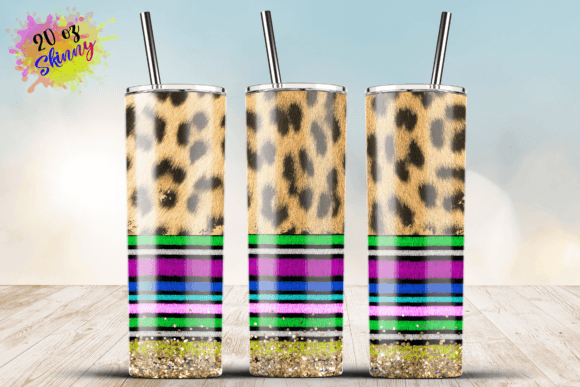
As someone who stitches for clients and my own small shop, my first step with any new embroidery file is to picture it stitched out. Not on a screen, but on real fabric, in a hoop, under the needle. So when I look at this Leopard Serape Print design, my mind immediately goes to a practical scenario: a custom order for a boutique baby gift. The request is for a cozy, unique, yet playful item—perhaps a hooded towel or a soft blanket for a nursery. This design catches my eye because it’s not just a generic animal print; the “serape” style suggests a woven, textile-like texture, blending a wild pattern with a folk-art warmth.
The Mood and Project Fit
The visual personality here is confident and stylish, but with a handmade-friendly twist. The leopard spots are graphic and bold, which translates well to clean satin stitch borders, while the serape stripes offer an opportunity for interesting fill stitch variations. It creates a mood that’s modern, a little bohemian, and perfect for gifts or products that feel curated rather than mass-produced. This isn’t a design I’d use for a corporate logo patch; it naturally belongs to personalized gifts, boutique apparel, and lively home decor.
I imagine it on a textured cotton tote bag for a craft fair—the bold shapes would stand out beautifully against the fabric. On a heavyweight sweatshirt, it would feel like a statement piece. For baby embroidery, like on a romper or a knit blanket, it introduces pattern in a way that’s fun but not overly childish. The layout, with its tumbler shape, suggests it’s meant for a contained, focal-point application, ideal for the center of a tea towel or the front of a cap.
Performance on Real Products
In real-life embroidery situations, the success of a design hinges on stitch clarity and adaptability. For custom apparel like t-shirts, I’d be cautious. The likely stitch density in the filled areas could be hefty for lightweight, stretchy fabric without proper stabilizer. On a sturdy tote bag or apron, however, it would be magnificent—the details would hold up to use and washing. As a potential embroidered patch, this design has strong recognition value; the tumbler shape with its distinctive print could become a signature item for a small shop selling kitchen-themed merchandise.
When considering commercial embroidery projects or products for an Etsy listing, this design adds visual appeal that elevates the perceived value. A customer looking at a mockup of this on a pillow cover sees a complete, coherent graphic, not a scattered motif. That builds trust in your craftsmanship. For holiday gifts or wedding gifts—think personalized kitchen towels for a new home—this design feels celebratory and unique, enhancing its giftability.
Where to Use with Care
My practical judgment flags a few areas for careful application. The tumbler shape, with presumably curved lines and corners, demands attention on curved surfaces like caps. You’d need to test hoop placement to avoid distortion. If the design has very small details within the print—tiny spots or thin stripes—they might get lost on textured fabrics like a sweater or a waffle-knit towel. Stitching this on dark fabric would require a thoughtful thread color strategy to maintain the serape’s brightness; a simple white underlay might not suffice.
Also, for products that need frequent washing, such as kitchen towels or baby clothes, the integrity of the stitches in the denser filled areas is paramount. A robust fill stitch here is better than a delicate one. I wouldn’t attempt this in a very small hoop size unless the file is explicitly optimized for it, as compression could muddle the pattern’s distinct personality.
Notes for the Embroidery Designer
Before committing this to a client’s project, my standard protocol applies. Always test the design on scrap fabric first, using the same material as your final product. This reveals the true stitch density and how the thread colors interact with your background. Check thread color contrast thoroughly; a leopard serape on a light background versus a dark one could need completely different palettes to pop.
Review the stitch density in your software. Are the fills so dense they might pucker the fabric? Are the outlines cleanly separated for smooth satin stitches? Confirm the hoop size required and inspect small details on-screen at full scale. It’s also wise to test it in black and white mockups to see if the shapes are strong enough for recognition even without color—a sign of a well-built design.
For commercial use, the most critical step is to confirm licensing before selling finished items. Since this is a digital embroidery file from the Crafts and Graphics category, understand the terms for personal versus commercial projects. Using it as a design asset in your craft business is fantastic, but only if the license permits it. This protects your professionalism and brand consistency.
The Final Impression
Ultimately, the Leopard Serape Print design feels like a versatile, mood-setting graphic for makers. It has the boldness to attract buyer engagement on an Etsy shop page and the character to make a handmade product feel special. Its success on the final product—whether an embroidered patch, a tote bag design, or holiday embroidery—depends on pairing it with the right fabric and executing it with mindful technique. For embroidery designers and small business owners looking to add a stylish, textured pattern to their repertoire, this file offers a solid foundation for creating products that stand out in a crowded, creative market.